
It is the question keeping every language student awake at night. You open LinkedIn, and someone is claiming "Translation is dead." You check the news, and another company is switching to pure Neural Machine Translation (NMT).
So, should you quit now? Should you change majors?
Absolutely not. But you do need to change your strategy. The era of the "human dictionary" is over, but the era of the Language Architect has just begun.
The Hard Truth: What AI Can (and Cannot) Do
Let’s be honest. For simple, repetitive tasks—like translating a user manual for a toaster—AI is already faster and cheaper than you. If your only skill is swapping English words for Spanish words, you are in the danger zone.
However, AI struggles massively with three things that humans excel at:
- Contextual Nuance: AI translates text; humans translate intent. An AI sees "Break a leg" and translates it literally. A human knows it means "Good luck."
- Cultural Localization: AI doesn't know that a specific color is offensive in Thai culture, or that a marketing slogan sounds like a swear word in Brazil. You do.
- Emotional Weight: Literature, marketing copy, and legal defense arguments require a "soul." AI cannot feel; therefore, it cannot make a reader feel.
The New Role: "The Pilot," Not the Engine
Think of it this way: Calculators did not replace mathematicians. They just stopped mathematicians from doing long division by hand, allowing them to focus on complex theories.
AI is your calculator. The future of translation isn't Human vs. AI. It is Human + AI.
Your new job title might not be "Translator." It might be:
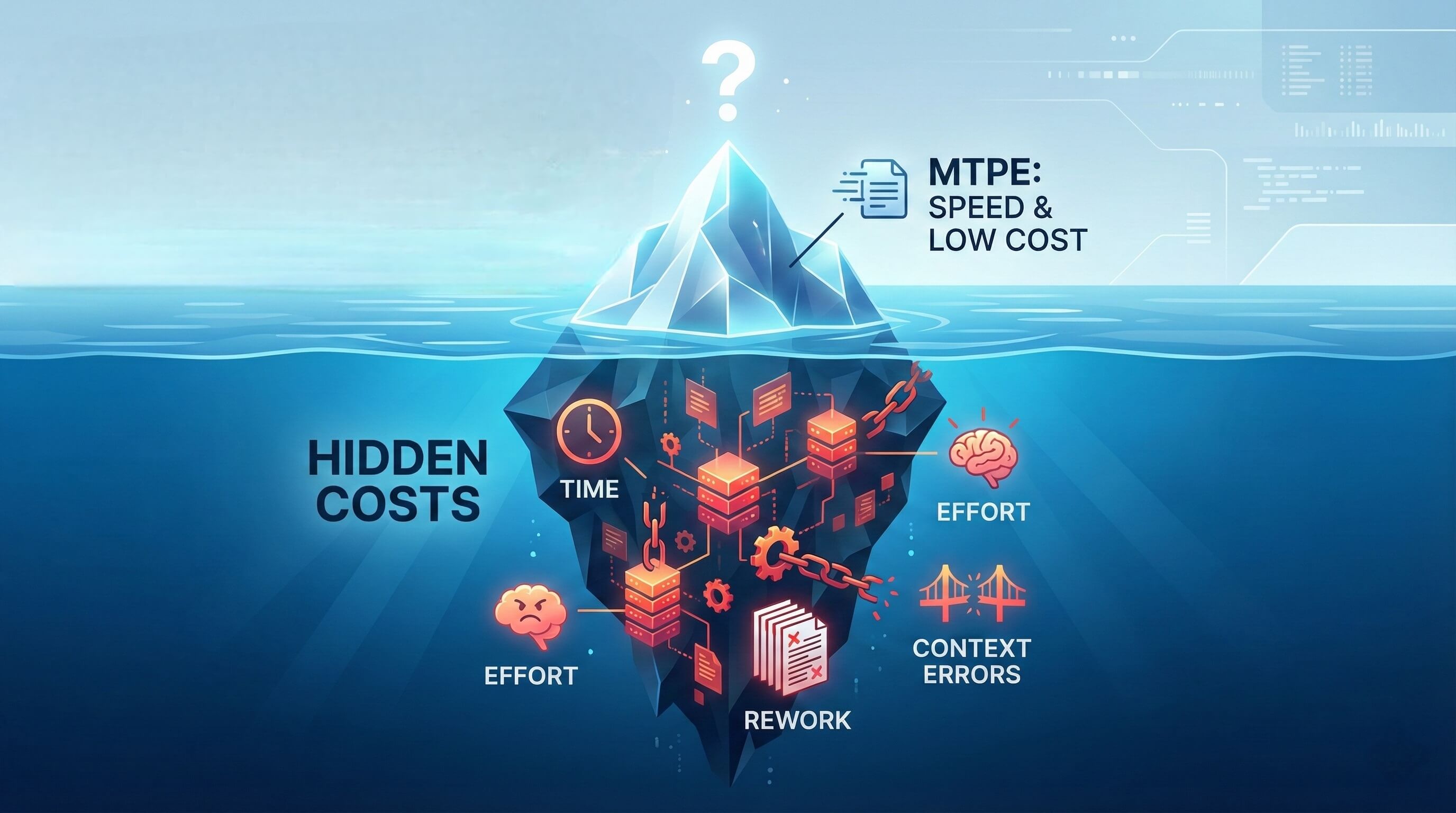
- MTPE Specialist: (Machine Translation Post-Editor) – You take the AI's "rough draft" and polish it into gold.
- Localization Strategist: You advise companies on how to speak to a foreign market, using AI to generate the bulk text while you refine the message.
- Language Data Trainer: You teach the AI models to understand the specific jargon of law, medicine, or engineering.
3 Steps to Future-Proof Your Career Today
1. Stop Competing on Speed
You will never beat an AI on speed. Stop trying. Instead, compete on specialization. Become the "Go-To" expert for Medical Patents or Video Game Localization. AI is generic; you must be specific.
2. Master the Tools (Don't Hide From Them)
The translators who will lose their jobs are the ones refusing to use AI. The translators who will get rich are the ones who master it. Learn how to use tools like the NovaLexy Playground to speed up your workflow. If you can do 5,000 words a day with AI assistance instead of 2,000 words manually, you just doubled your income.
3. Focus on "Transcreation"
Transcreation is halfway between translation and copywriting. It’s rewriting a message so it "hits" the same way in the target language. This requires creativity, humor, and empathy—three things ChatGPT still can't fake effectively.
The Verdict
AI isn't coming for your job—it's coming for your tasks. The boring, repetitive tasks are going away. What's left is the high-value, creative, and strategic work.
The question isn't "Will AI replace me?" The question is: "Are you ready to become a pilot?"