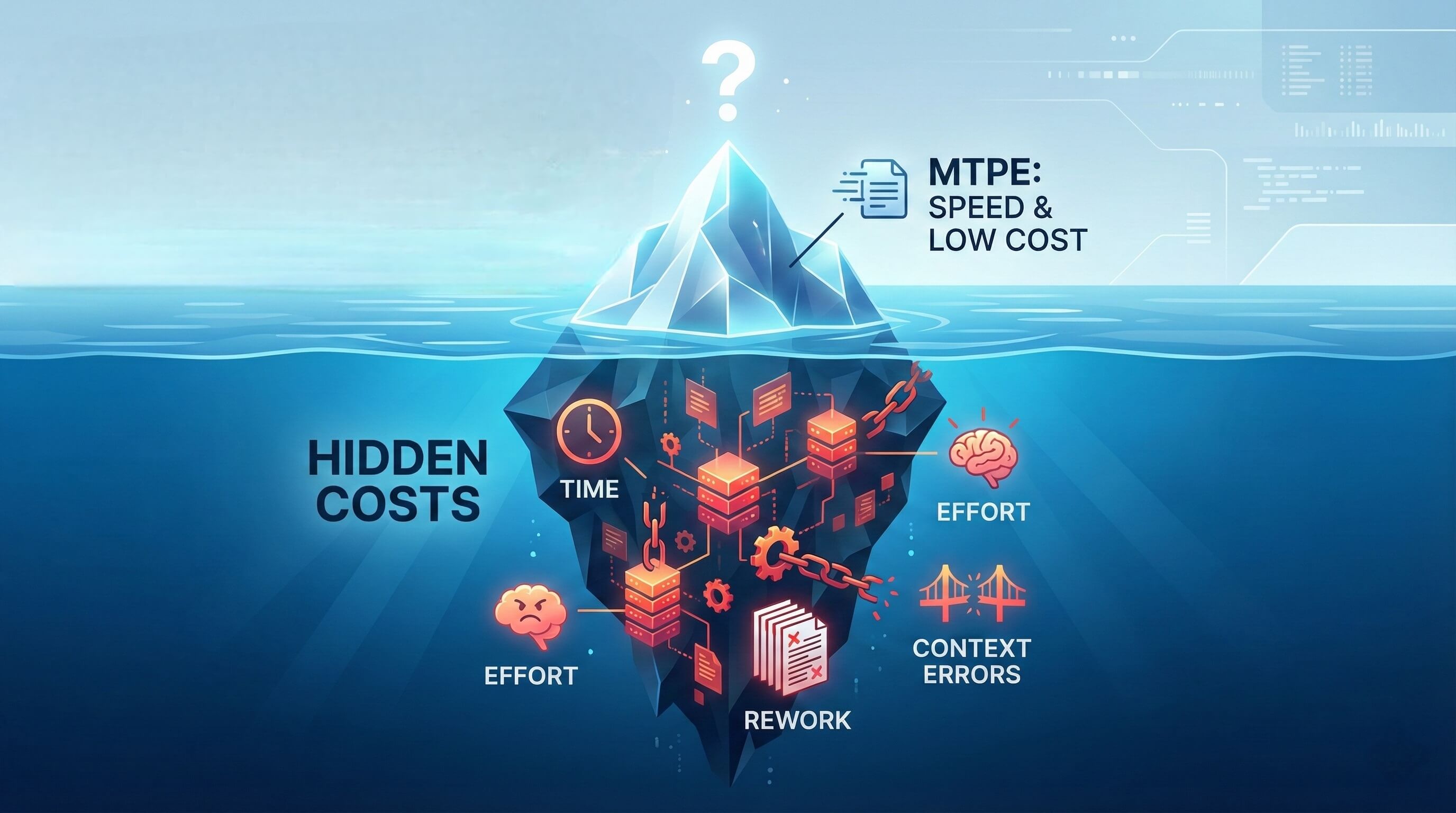
Before we even ask whether MTPE is killing translator rates, picture the moment: A loyal client sends you a project you know inside out. But this time, the entire file has already been pushed through an AI engine—and they expect you to “just post‑edit” the mess for half of what you normally earn.
Suddenly, a job that paid the bills feels like scraping by. If this scenario hits close to home, you're not alone. In 2026, machine translation post-editing (MTPE) has become the default for huge chunks of the industry, and it's squeezing rates harder than ever.
Industry reports paint a stark picture. Over half of all translation work now starts with machine output. Clients love the speed and upfront cost savings, but as we predicted in our analysis of AI translation jobs in 2026, translators often end up doing nearly as much work to fix awkward phrasing, terminology errors, and cultural misses—all for significantly less pay.
The "Post-Editing Discount" Trap
Typical numbers tell the story. Full human translation in common European pairs might still fetch $0.12 to $0.25 per word for experienced freelancers. MTPE? Often $0.06 to $0.12, sometimes lower if the client classifies it as "light" editing. That's a 40-60% hit on earnings for work that can take just as long when the raw output is messy.
Why does post-editing often feel more draining? It's the cognitive load. When you translate from scratch, you flow through the text, making creative choices. With MTPE, you're constantly switching modes: scan a segment, decide if it's usable, tweak or rewrite, check consistency. It's stop-start mental labor that wears you down faster.
Freelancers describe it as "soul-crushing" when the AI hallucinates terms in technical content. One legal translator shared how fixing AI-generated contracts took longer than starting fresh because spotting subtle liability shifts required hyper-vigilance—a key reason why AI quality gates are becoming the new battleground.
The Real 2026 Data on Rates and Workloads
Let's ground this in facts from reputable sources:
- Nimdzi's 2025 Reports: Note persistent pricing pressures, with per-word models under fire as AI handles more volume.
- Slator's Coverage: Highlights how AI shifted demand—more post-editing gigs, but at reduced rates, especially for general content.
- Internal Cost Cutting: CSA Research surveys show enterprises pushing MTPE for internal docs and support materials to cut costs by up to 40%.
In high-volume sectors like e-commerce or software localization, MTPE is now table stakes. However, it's not universal doom. Specialized domains resist better. Medical device instructions or patent filings still demand full human translation because accuracy risks are too high. Rates there hold at premium levels—often $0.20+ per word.
Why Clients Push MTPE (And How to Counter It)
Clients aren't villains; they're responding to boardroom pressure for faster, cheaper global reach. But smart buyers know "good enough" works for knowledge bases, not customer-facing marketing. The counter? Educate them on risks. Share examples where poor MTPE led to brand damage.
Negotiate smarter using these tactics:
- Switch to Hourly: Never accept per-word rates for messy MTPE. Track time honestly and charge for the real effort.
- Tier Your Services: Offer full translation for premium content, and discounted MTPE only for low-risk internals.
- Bundle Value-Adds: Don't just edit; offer terminology management or style consistency checks to justify a higher fee.
Tools That Help You Fight Back
Here's where platforms like NovaLexy shine for pros. You can't fight AI with a typewriter; you need better AI.
Our playground lets you test AI outputs quickly, spotting bad raw MT before committing. Even better, custom AI templates streamline repetitive fixes, boosting your throughput on post-editing without dropping quality. For deeper guidance, the AI mentors feature offers tailored advice on workflows—like setting up personal glossaries that force better AI consistency from the start.
Signs of Hope: Where Rates Are Holding or Rising
Not everything is declining. As we noted in our guide to the highest paying translation niches of 2026, demand explodes in areas AI can't touch yet:
- Transcreation: Brands pay top dollar for creative adaptation that captures emotion, not just meaning.
- Multimedia Localization: AI-assisted dubbing scripts still need human polish for timing and lip-sync accuracy.
- Real-time Interpreting Hybrids: Blending tech with live expertise for complex events.
One game localizer shared earning more by focusing on narrative dialogue, where cultural humor demands human flair. Younger translators entering the field are smartly pivoting early—building portfolios in legal or fintech, where regulations slow AI adoption.
Avoiding Burnout in the MTPE Era
The mental toll is real. Constant error-hunting leads to quicker fatigue than creative translation. Strategies that help:
- Set Boundaries: Cap MTPE at 50% of your workload to protect your creative energy.
- Micro-Breaks: The "Pomodoro" technique is essential when doing high-focus correction work.
- Diversify: Don't just translate. Mix in consulting, teaching, or tool training gigs.
The Bottom Line for 2026
MTPE isn't killing the profession—it's reshaping it. Volume work is commoditizing, but expertise is premiumizing. Translators who adapt—specializing, negotiating fiercely, and leveraging pro tools—will come out ahead.
The industry needs you more than ever to bridge what AI can't. Clients who skimp on quality eventually learn the hard way. Position yourself as the partner who delivers reliable results, not the cheapest fix. If rates feel squeezed today, focus on tomorrow's opportunities. The translators thriving now aren't fighting the tide—they're surfing it.